
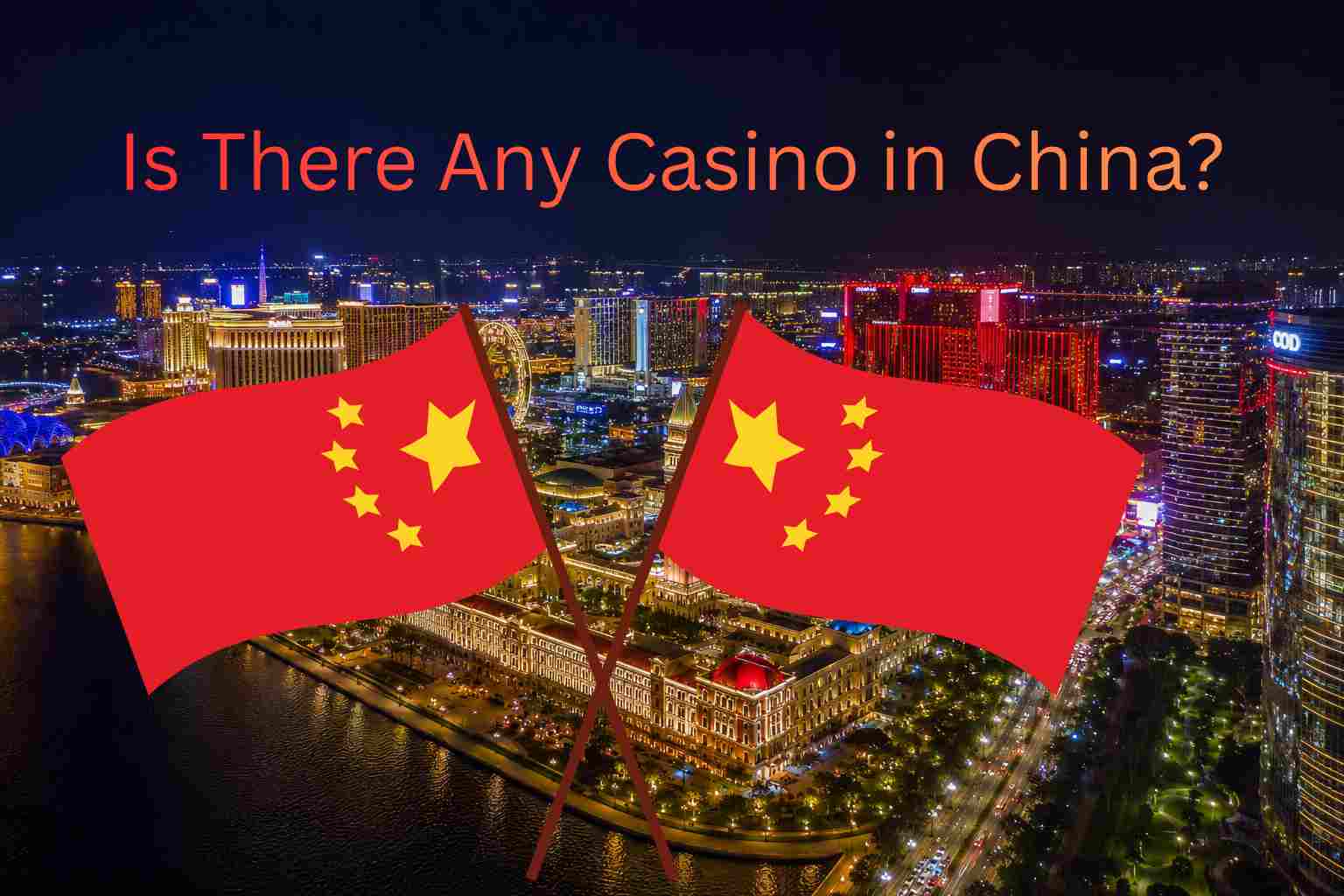
Is There Any Casino in China? Everything You Need to Know Before You Visit
China is one of the most fascinating countries in the world a land of ancient dynasties, ultramodern cities, and a booming economy that has reshaped global commerce. Yet when it comes to casino gambling, China presents a striking paradox. Despite being home to the world’s most active gambling culture and the planet’s highest-grossing gaming destination, the vast majority of Chinese territory maintains one of the strictest anti-gambling legal frameworks in the world.
So, is there any casino in China? The answer is nuanced and understanding it requires a look at geography, law, culture, and economics all at once.
The Legal Landscape of Gambling in Mainland China
The People’s Republic of China operates under a criminal code that explicitly prohibits most forms of gambling. This is not a loosely enforced guideline it is a firm national policy backed by the Ministry of Public Security. Anyone caught operating an unauthorized gaming establishment can face imprisonment, heavy fines, and asset seizure.
The only gambling-related activities permitted by Beijing are two state-operated lotteries. The China Welfare Lottery, established in 1987, funds social welfare programs across the country. The China Sports Lottery, launched in 1994, supports athletic development and sports infrastructure. These are not classified as gambling under Chinese law they are considered fundraising instruments of the state.
Outside of these two programs, no private individual or corporation may legally operate a casino, sportsbook, poker room, or any other gaming establishment anywhere on the Chinese mainland. This includes cities like Shanghai, Beijing, Shenzhen, Guangzhou, and Chengdu no matter how large or cosmopolitan they may be.
Macau The One Legal Casino Destination in China
The story changes dramatically when you cross into Macau, a Special Administrative Region (SAR) on China’s southern coast. Under the One Country, Two Systems framework that also applies to Hong Kong, Macau maintains its own legal system one that has permitted gambling for well over a century.
Macau’s gambling history stretches back to the mid-19th century, when Portuguese colonial authorities began regulating gaming houses as a way to generate public revenue. That tradition continued through decades of transformation, and today Macau stands as the undisputed gambling capital of the world surpassing even Las Vegas in annual gaming revenue by a wide margin.
In 2025, Macau’s six licensed casino operators collectively generated approximately $30.8 billion in gross gaming revenue, according to figures published by the Gaming Inspection and Coordination Bureau. That figure represents a year-on-year increase of more than 9%, reflecting the continued recovery of Asian tourism following the pandemic and growing appetite among mainland Chinese travelers for premium leisure experiences.
The Cotai Strip and Macau’s Iconic Casinos
Most of Macau’s world-class casino resorts are concentrated along the Cotai Strip, a stretch of reclaimed land that connects the islands of Taipa and Coloane. This area is widely described as the Las Vegas Strip of Asia, though in terms of sheer scale and revenue it has far outgrown that comparison.
Major properties along the Cotai Strip include resorts operated by Las Vegas Sands, Wynn Resorts, MGM Resorts, Melco Resorts & Entertainment, Galaxy Entertainment Group, and SJM Holdings. These companies collectively represent billions of dollars in infrastructure investment and employ hundreds of thousands of people across the region.
The Venetian Macao, operated by Las Vegas Sands, is one of the largest casino resort buildings in the world by floor area. Beyond its enormous gaming floor, it houses a full replica of Venice’s canal system, a 15,000-seat arena, hundreds of retail shops, and dozens of restaurants spanning virtually every major cuisine.
Wynn Palace, situated on a man-made lake in Cotai, is known for its refined aesthetic, Michelin-starred dining, and a sky-gondola cable car that transports guests across the property. The resort has invested heavily in curated art installations and live entertainment, positioning itself at the ultra-premium end of the market.
MGM Cotai takes a different design philosophy built around an immersive dynamic theater concept, where the property itself functions as a living, transforming entertainment space. Its spa facilities and experiential amenities have earned consistent recognition from global hospitality publications.
Baccarat — The Game That Defines Macau
Walk onto any casino floor in Macau and one thing becomes immediately clear: baccarat dominates. Unlike Las Vegas, where slot machines and blackjack are crowd favorites, Macau’s gaming culture revolves almost entirely around baccarat tables.
This preference has deep cultural roots. Baccarat is perceived in Chinese gambling culture as a game of fate and fortune — one where skill matters less than luck, which aligns philosophically with traditional ideas about destiny. High-net-worth visitors, often referred to as VIP or “premium mass” players, routinely wager hundreds or even thousands of dollars per hand, making baccarat the single most profitable table game category across all of Asia.
Industry analysts estimate that baccarat accounts for more than half of Macau’s total gross gaming revenue in any given year, with some projections placing that share even higher during peak travel periods such as Chinese New Year and Golden Week. If you are curious about gambling laws in other regions, our detailed guide on Is There Any Casino in Hawaii? covers everything you need to know.
Hong Kong Gambling Without Casinos
Hong Kong, another Special Administrative Region of China, occupies a middle ground. Full-scale casino gambling is not permitted on Hong Kong soil, but certain forms of wagering are fully legal and heavily attended.
The Hong Kong Jockey Club is one of the most unique institutions in all of Asia a nonprofit organization that holds a legal monopoly on horse racing, football betting, and the lottery within Hong Kong. The Sha Tin Racecourse and Happy Valley Racecourse draw enormous crowds throughout the racing season, and the Jockey Club contributes billions of Hong Kong dollars annually to charitable causes.
For those seeking a full casino experience, however, Hong Kong is merely a short ferry ride away from Macau a trip that typically takes under an hour and is extremely well-served by fast ferry operators from both Hong Kong Island and Kowloon.
Hainan — China’s Potential Future Gaming Destination
One of the most closely watched topics in the global gaming industry is the future of Hainan Island, China’s southernmost province and a rapidly developing free-trade zone. Beijing has shown strategic interest in transforming Hainan into a world-class leisure and tourism economy, and industry observers have long speculated that some form of regulated gaming could eventually be introduced there.
As of 2026, no casinos operate in Hainan and no formal legislation has authorized gambling on the island. However, the ongoing development of integrated resort infrastructure, international airport expansion, and duty-free retail zones has fueled persistent speculation that Hainan’s entertainment economy could one day include regulated gaming — potentially opening the world’s largest untapped casino market.
Why So Many Chinese Gamblers Travel Overseas
The strict domestic prohibition on gambling has not suppressed demand — it has simply redirected it. Millions of mainland Chinese tourists travel each year to destinations specifically because of their casino offerings. Singapore, South Korea, the Philippines, Australia, Cambodia, and Vietnam all actively market their integrated resort properties to Chinese visitors.
Singapore’s Marina Bay Sands and Resorts World Sentosa have become iconic landmarks partly because of the significant volume of Chinese tourism they attract. The Philippines has developed an entire district near Manila known as Entertainment City with Chinese visitors as a primary target demographic.
This outward flow of gambling tourism represents a staggering economic export billions of dollars leaving China annually and enriching foreign gaming economies. It is precisely this dynamic that makes the Macau market so strategically significant: it captures a portion of that spending while keeping it within Chinese sovereign territory.
The Bottom Line
For anyone asking whether there are casinos in China, the clearest and most accurate answer is this: Yes, but only in Macau. Nowhere else in Chinese territory not the mainland, not Hong Kong, and not Hainan currently offers legal casino gambling.
Macau is not just a footnote in global gaming it is the world leader, generating more gaming revenue annually than any other jurisdiction on Earth. Its casinos are world-class, its hospitality infrastructure rivals the best in Las Vegas or Monte Carlo, and its position within China’s One Country, Two Systems framework gives it a unique and protected legal status that is unlikely to change in the foreseeable future.
Whether you are a casual tourist looking to try your luck at a baccarat table or a serious traveler seeking a premium Asian resort experience, Macau delivers at every level. Just make sure to leave your gambling ambitions at the border if you are staying on the Chinese mainland — the law there leaves absolutely no room for gray areas.